Showing posts with label evs. Show all posts

Tuesday, September 20, 2016

The end is nigh….

Do you remember our EVS volunteer in Romania? Catch up on her story below...


I write this blog entry just as I am about to leave for my last travels around Romania, across the country to explore the Danube Delta and (finally) its capital Bucharest.
All project activities with the kids came to a close at the end of last week. The final two weeks of the summer camps were devoted to primary school aged children in the villages. For the most part, it was a lot of fun-particularly the first week, where we were in sole charge of the kids.
The first week and into the second we prepared (quite last minute but thankfully successfully) activities with the theme ‘Discover Europe’, with the aim to introduce the children to the culture, history, geography and language (a little) of different European countries. The first day was focused on Romania and we then branched out to present our own countries and others.  I was in charge of British and Romanian culture, as well as preparing French activities-for the Romanian activities we decorated clothing patterns, made bookmarks and vampire masks amongst other things, and in the British activities included split-pin soldiers (thanks Mihai for finding them!) and loo-roll bagpipers. In the afternoons we played fun games outside and in with the kids.
The second week was slightly disappointing in comparison as we were slightly usurped by another lady running a camp-to her credit she managed to hold the attention of 60 kids with her voice, however a little less shouting at the youngest kids wouldn’t have gone amiss. Despite only assisting for some of the week, we still had fun being with the children, accompanying them on walks around the village and teaching them English and German songs.
The rest of our time in the week was filled with cleaning the flat before the imminent departure of two of the long termers the beginning of this week-(cleaning a kitchen thoroughly takes a long time but I was successful at getting the grime off the oven) as well as recording and filming for our end-of project music video to present in the closing event. With ingenious lyrics by our resident song-writer Mathias, improved singing to last time and an easier rhythm, as well as some fun scenes to accompany the music, I think it fair to say, it was a success and our audience were thoroughly entertained!
The week culminated in the closing event in which we presented on our EVS experiences and a meal followed at the weekend by a full-blown trip of Maramures all together featuring a chance to try on traditional Romanian clothes, a horse and carriage ride and hike to the Horses Waterfall in Borsa as well as a delicious meal in a shepherd’s hut in the mountains.
Thanks for organising AIST staff-was a lovely way to spend our last few days together as a full team

Annika Mathews

Friday, June 24, 2016

Testimonio from a SVE in España


I first heard about European Voluntary Service during a Blablacar journey from Brest to Rennes in northern France.  

An excitable fellow passenger spent almost the entire 3 hour drive telling me all about her life changing experience she was having as a volunteer. I was astonished to learn that such an opportunity existed; even more so that I’d never heard of it! As soon as I got home from that journey I jumped straight on the computer, and typed in those three magic letters E V S. Little did I know, I too was about to embark on a life-changing journey….

Flash forward 6 months. After what seemed like an eternal flight from London, I arrive, dazed and confused at Madrid-Barajas airport. I walk through the sliding doors expecting to find my tutor Cristina, struggling to remember her face from the Skype interview we’d had months previously. After making eye contact for a couple of seconds too long with a few potential Cristinas, I give up and go outside to see how warm it is. ‘Hmmm I could get used to this!’ It crosses my mind to get practicing my Spanish straight away and ask someone “donde está Majadahonda?” just in case Cristina doesn’t show up. But how do I pronounce Majadahonda again? I decide to have another go at the arrival lounge.

 As I walk back towards the sliding doors, I notice out of the corner of my eye someone holding a card with a British flag printed on it and ‘Bienvenido Sam!” written above it. Ah that must be Cristina, but who’s this grinning blonde girl with her? Of course, it’s Greta my fellow volunteer from Lithuania. Immediately, my nerves disappear and we chat all the way to Majadahonda. On the way, I pluck up the courage to ask to Cristina to pronounce it as slowly as she can. Now I’ve got it!

Cristina takes us to our new apartment and we meet our housemates Martha and Juliet. Once the ‘besos’ and ‘encantados’ are out the way, Martha looks at me and says something very quickly in Spanish, everyone laughs… loudly. I join in pretending to understand the joke. Greta and I exchange a look of bemusement and then the tour of the flat begins. I think I got away with it this time but I it makes me realise that my Spanish is going to need some serious work.

The following day it was time to meet the rest of the team at the youth centre. We were greeted with beaming smiles and warm embraces and given a tour of the building. Though making small talk in Spanish was a challenge, whatever lingering anxiety was quickly extinguished and I knew then that this was going to be a great year.

The first few months of the project flew by as Greta and I settled in nicely. From making new friends from across Europe at the on-arrival training to starting our intensive Spanish course, from exploring Madrid at the weekends to getting to know our students at the English conversation workshops, our full-on schedule kept us incredibly busy. Before we knew it, it was Christmas and a chance to reflect on everything we’d learnt so far.

I went back home to the UK and bored my family and friends with perhaps too much detail of my time thus far in Spain. I realised that despite a few minor imperfections, the experience I was having was an incredible opportunity to learn many new skills and to grow as a person. Though it was hard to say goodbye once again to friends and family, I was eager to get back to Spain.

The second half of the project seemed to go by even quicker than the first. Though our Spanish course came to an end I was gaining more and more confidence speaking this wonderful language. We started with the English Book Club in January which turned out to be a great addition to the project, a chance to make new friends and of course to read some brilliant books.

Arriving back in Majadahonda from a weekend trip to France in March, I realised that I was starting to feel very much at home here. Our conversation workshops were improving week on week, I was meeting loads of new people, my Spanish was coming on leaps and bounds and after a long, wet winter (by Madrid standards!) the sun was starting to shine again. In just a few short months the whole thing would sadly be coming to an end.

It is only now, with the project drawing to a close, that I am starting to appreciate the excitement and passion of the girl who introduced me to EVS during that fateful Blablacar journey back in France a year and a half ago. it is starting to sink in just how much I have learnt this year. From simple Spanish slang words like ‘chungo’, ‘majo’ and ‘molar’ to using video editing software, from running a book club to learning all about how EVS works, from writing a newsletter of international opportunities to improving my confidence in public speaking, the list goes on and on.


Sam Bartrop
European Volunteer Service 2016


Wednesday, December 9, 2015

Stereotypes; What’s In A Country?


I imagine hell like this: Italian punctuality, German humour and English wine. On the surface this is quite a funny joke, but look a little deeper and you will see it is actually saying something very important about the expectations we derive from cultural stereotypes. While living in the UK I had many British friends. Some of them were punctual, some of them were always late, some of them were funny, and some of them more dry and serious (although of course I never drank English wine), but I never thought anything of it. It would be very dull indeed if everyone was overly polite all the time, played cricket, drank beer, loved the Queen and read a lot of Shakespeare. It was these differences in my friend’s personalities which made the rich tapestry of life so interesting and exciting. We were all British, but we were all different.

This all changes once you move abroad and you are suddenly forced into being an ambassador of your home country. Everything that you do is now measured by how well you comply or not to the expected behaviour of people from your country.   While living in Britain, if I had a British friend who was late, they were just late. However, abroad, an Italian person is expected to be late, and when they are, everyone is secretly slightly happy that their preconceived judgments of Italian people have been confirmed and reinforced. On the other hand, when a German person is late, they have failed at being German. Everyone is secretly outraged that they are forced to question if their preconceived judgments of German people are actually fair and accurate. The poor German in question is expected to fix their problem with tardiness as soon as possible, so everyone can go back to happily (and wrongly) believing that all Germans are punctual. Douglas Adams explores exactly this in his book Last Chance to See. 

“If they [Helmut and Kurt] were going to be like that, then I just wished they hadn’t actually been German. It was too easy. Too obvious. It was like coming across an Irishman who actually was stupid… [or] an American businessman who actually did have a middle initial and smoked a cigar. You feel as if you are unwillingly performing in a music-hall sketch… If Helmut and Kurt had been Brazilian or Chinese or Latvian or anything else at all, they could then have behaved in exactly the same way and it would have been surprising and intriguing.”

When living abroad, and mixing in international circles, we are no longer allowed our own identities. We have the stereotypes of the identities of people from our home countries forced upon us, and we are expected to perform this role faithfully, however cliché or unnatural this may be.

On my project here, there are also three people from Germany, two from Estonia (but of a Russian minority) one from Denmark, and one other from England. This Friday we were asked to paint our faces with the flags of our home countries, and to take pictures. While this was great fun, there is nothing like walking around with the British flag plastered on your face to make you question what your national identity means. This is a question not only of what your own personal identity means to you, but also of how the world identifies you. We are surprised if a German volunteer makes a funny joke, and we were outraged when the other English volunteer revealed that she doesn’t like tea. But none of this should be surprising. We are all just individual people, who happen to have been born in one country or another. Yet this is often where the similarity ends. Within this country we have all had very different upbringings and life experiences from the several millions of other people who happen to have been born in the same country as us, and we all have very different personalities and ways of life. While living abroad, and especially while participating in a European project, we are all in some way ambassadors for our home countries, this is inescapable. But it should also be remembered that we are all just individuals, living our individual lives, and should in no way be held accountable to, or responsible for, other peoples prejudiced and preconceived judgments of how people from our countries should act. Italians can be punctual, Germans can be late or funny, I have even found perfectly drinkable English wine and none of this should be in any way surprising.

Instead of being presented with stereotypes by age, sex, colour, class or religion, children must have the opportunity to learn that within each range, some people are loathsome and some are delightful. – Margaret Mead

Clare

EVS Volunteer Romania

Tuesday, December 8, 2015

EVS experiences in Hungary


The project was based in a small village in the South of Hungary, 12 km from the border with Croatia. With 4 other volunteers from Spain, Portugal and Romania, we worked on several community development, sustainability and environmental projects including a large youth exchange about cycling with 66 young people from 12 different European countries involved.


 I held free English lessons on a weekly basis, and also organised cultural evenings for the local people to try food and learn about British/Indian culture. We also held frequent cycling trips around the area and longer ones to Croatia to promote cycling as a great mode of transport, even in the winter! This was definitely my favourite part of the EVS, cycling in a rural area is a breath of fresh air when compared to navigating the concrete mess of London. We had a huge amount of freedom in exploring the local area by bike and meeting people, and it was a great way to gain an insight into Hungarian culture as a lot of people in the area also used bikes. We were also required to participate in Hungarian lessons and I am proud to be able to hold a basic conversation in Hungarian (one of the hardest languages to learn!), and we also learn traditional Hungarian dance lessons. 

Working in the local nursery was very challenging due to the language barrier, but it was a lot of fun and once again, an insight into Hungarian life. We also ran projects in high schools to do with sustainability and development and it was an excellent chance to practice our Hungarian. Over the first few months, we learnt about analog photography and used our acquired skills to take and develop photos, as well as holding exhibitions for local people. We were able to use this later during the youth exchange where one activity involved bike-related analog photography. In terms of accommodation, for the first four months, we all lived in a house in the village with a big garden. We had to chop wood to heat the house by furnace, which felt like a true rural living experience to me. Over the spring/summer months we moved to a container in the field where our office was based (our office was also a container). It was incredibly hot in there but luckily we could jump in the freezing outdoor showers if it ever got too overwhelming. The project leaders, Zoli and Orsi, were wonderful and really helpful throughout. It seemed like we had entered at a point where there personal lives were quite hectic and this may have caused tensions and affected their work sometimes (we were a very very small team) but all in all, they are wonderful, positive people and it was a joy to be there with them. I learn a lot about the inner workings of NGOs and am currently freelancing for an environmental charity in London.

EVS is such a great way to meet and work with like-minded people in a place you may have never thought you would visit before. Being British, I think it's very easy to forgot the fact that we are European citizens and think of mainland Europe as 'other' to the UK. Having volunteered in a highly disadvantaged area of Hungary for 8 months with 4 other volunteers from Spain, Portugal and Romania, I feel so much more strongly connected to Europe and feel very lucky to have the freedom to move around this land. London can be a hard place to meet and connect with people, and to sustain long term friendships. Having done EVS, I feel that I have gained a network of friends all over Europe who I have made a genuine connection with, and who I know I will see again in the future.  

Ami
EVS Volunteer 2015

Friday, November 27, 2015

September in Czech Republic


September has been a busy month and has gone by so fast! the first two weeks were full of Czech Language lessons and fun activities with the other volunteers! we went to a summer camp for a few days to do some basic training for our activities, and practice our Country presentations as I would soon find out I will be doing my presentation A LOT! hahah

I made myself at home in a flat which I share with 2 other volunteers who are really nice, I like my room as its cozy and has little messages around it from previous volunteers. for the first few weeks I baked a lot of cakes! and the 8 of us often gathered for movie nights and get togethers :) I also decided to buy myself a cheap second hand bike as I decided I wanted to begin cycling this year and second hand bikes are cheaper here than in England! I went for a few bike rides and managed to end up in Poland by accident as well! we have all been for meals and tried some of the local foods! my favorite is Smažený sýr which is fried cheese! yum!

I began my normal time table after we finished our intensive Czech course (which we continue every Friday now for the rest of our year) I work in Schools 3 times a week helping kids of various ages with their English lessons which I really enjoy as the kids are very friendly. I also help mothers with conversation classes twice a week. Sometimes we help in the art department or the mother care center decorating the youth center. We attended different clubs at the center too such as belly dancing and art clubs :) having a great time so far! bring on the next 11 months!


 This is the part of the blogg from our EVS volunteer Charlotte. Want to read more ? Follow here blogg at http://sharlaloumali44.tumblr.com/

Monday, July 27, 2015

EVS diary from Spain


I’m writing this as I have just seven days left of my EVS in Burgos, Spain.   It wasn’t always easy.


To start, the winter here is cold. It felt a lot colder than the UK, which was something that I wasn´t expecting. The language barrier was also very difficult and people from Burgos didn’t care too much for speaking English. At the beginning I felt a little isolated, living in a city of 180,000 inhabitants and not knowing any fluent English speakers. City living was strange for me as well, having lived most of my life in rural Devon. But I soon learnt enough Spanish to communicate, bought a warm coat and started to enjoy the endless parties! 
Pozo de la agua
Burgos is a handsome, authentic and traditional Spanish city with so much tradition and culture, from the food and architecture, to the Camino and fiestas. I had never experienced anything like it.

I’ve got to know so many interesting people from Spain as well as the volunteers from other countries, something which would have been very difficult to do without my EVS experience. I live with a French and Italian girl and have been able to learn so much about other European cultures and traditions. I’ve also been able to travel to many parts of Spain (I even managed to complete 250 km of the Camino de Santiago). It’s an incredibly dramatic and beautiful country which I feel privileged to have seen.   

It’s really hard to summarise the experience I’ve had, it’s the kind of thing that just needs to be lived. If you get the opportunity to do something similar, I would say you should (but obviously experiences will differ). In fact, enjoyed it so much here that I am hoping to return to Spain after my EVS is over. Un saludo!
On the beach of Malaga
James Hewitt 

Tuesday, May 12, 2015

EVS IN BRITTANY FRANCE


To talk about all that I’ve done here in France over the last 7 months I feel could easily fill a book and so how to write and explain about my EVS experience in only a few paragraphs seems almost an impossible task! So I’ll try as best as I can.

I am a student of Human Geography and French at Sheffield Hallam University in England after graduating I am hoping to get into a job in the humanitarian sector within an NGO. I decided to try and find an EVS placement for my placement during my 3rd year. I was really keen on learning and progressing my level of French and so I only searched and applied for placements within French speaking countries. I got lucky and was offered a placement for 10 months (September to July) in Brittany in France!! 
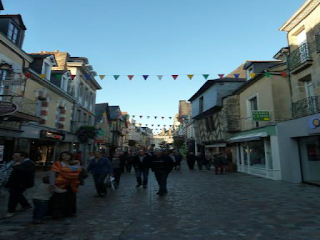
The town I live in is called Redon, it’s a town of 10,000 inhabitants so after living in Sheffield for the last 2 years it can be on the quiet side sometimes! However there is another 8 volunteers here in the same town (from Spain, Italy, Germany and Greece) working within different organisations (a boat museum, a school for children with disabilities, a youth centre, a cinema, a Lycee (equivalent to a 6th form college in the uk)) and we all live together in the same apartment complex within 3 separate apartments (3 volunteers per apartment) we share the kitchen and the bathroom and then each have a separate bedroom and so there is always another person around and every evening after work is spent eating together, drinking tea, chatting or going to the cinema or pub.


I work in a college 5 minutes’ walk away from my house as an assistant teacher for the class of ULIS a class for students who have disabilities, I help them write notes in class. I also do one on one lessons with the students to revise their different subjects or to teach them English. I have also run a photo workshop as my personal project and have gone out with the students to take photos in the local area. We will be holding an exhibition  of the student’s photos in June.
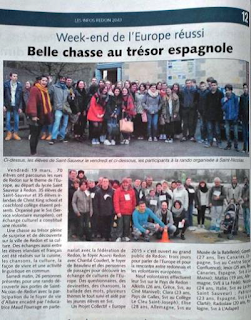
The group of volunteers (above) / The class of ULIS (under)


Every week I have a 3 hour French lesson with the other volunteers, also as a group we have spent every Thursday afternoon from November to March planning and organising a weekend of events for The Weekend of Europe the events included a treasure hunt, a film evening on the topic of immigration in Europe, a dance class, a walk, a graffiti event and a concert. This was a lot of hard work but very rewarding and I learnt many new skills such as being responsible for designing the poster and pamphlet, this I’d never done before. Other than work I have had amazing opportunities offered to me by my Hosting organisation including all the volunteers going to a film festival of short films, never have I watched so many films in so little time in my life! Afterwards as a group we had to choose our favourites or the ones we found most interesting and later in the year the local cinema held a short film evening with the films that we had chosen.


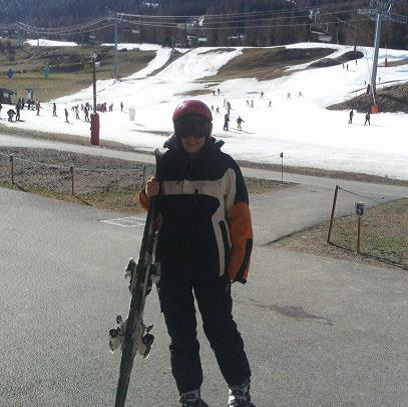


Another opportunity was to go skiing for the first time in my life!! This was arranged as a personal project of one of the other volunteers here in my town. However after I crashed right into a little kid and knocked him to the ground, and also that I was too scared to even move once we reached the summit not to even mention the cable car up there I think ice skating is scary enough for me from now on!

Being with other young people from all over Europe and working everyday with people of a different nationality has really opened up my knowledge of these different countries, their customs and ‘norms’ and we have had many opportunities to share our differences and cultures.

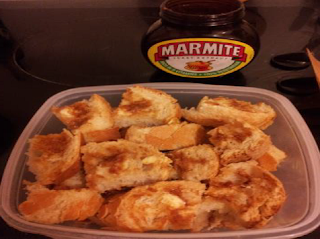
Every week I have a 3 hour French lesson with the other volunteers, also as a group we have spent every Thursday afternoon from November to March planning and organising a weekend of events for The Weekend of Europe the events included a treasure hunt, a film evening on the topic of immigration in Europe, a dance class, a walk, a graffiti event and a concert. This was a lot of hard work but very rewarding and I learnt many new skills such as being responsible for designing the poster and pamphlet, this I’d never done before. One such example is that each volunteer has to hold an evening in our hosting organisation to introduce their country with games, music and food etc. these have always been passed with a lot of laughter! Other times we’ve celebrated the Spanish carnival or Halloween at which we played games such as apple ducking that the other volunteers had never played before! Also I introduced Marmite to the students at work when they held a British breakfast event.


We have also had lots of opportunities to find out about the culture of Brittany by going to the ‘Fez Noz’ (night parties) which are music events of traditional Breton music and dancing! We have also eaten lots of Galettes (savoury pancakes local to here), visited other local towns and we also have had a wine tasting session in our French class!


  Fez Noz in Redon (down) / Rennes at 
Christmas (up)


 Biggest challenge here is having to go shopping by Bike! Trying to fit everything into a bag is almost a magic trick and the French baguette is really not designed very well for transporting!


I have had the great opportunity to participate in other different volunteering schemes before my EVS including the British government International Citizen Service scheme but nothing that I have done before has topped my year here in France!
My work has been brilliant, there have been moments of course with frustration of the language, at the beginning especially, but despite this my tutor has always been very supportive and kind and the moment that you start to be able to communicate with your students and they can understand what you are asking of them or you can start to follow what the teachers saying in the lesson are such rewarding moments that it’s worth every minute of frustration and it really creeps up on you without realising! I’m going to miss the students I’ve worked with and my colleagues so much, I don’t want to think about having to leave yet! My home life also has been made awesome by living with my flat mates who have become like my special ‘French’ family. Pretty much every second of the time that I’ve not been at work has been spent in their company and I’m not exaggerating! For some who need more personal space this could be too much but for me I hate spending too much time on my own so it’s perfect! Most of us come home for the lunch break as we all live very close to our jobs and so we eat lunch and dinner together and so these shared meals will be a really warm memory that will stay with me forever, not to mention all the different cakes that are made too from all the different countries! Many of our challenges we have faced whilst being here have been shared or even the same including for example the more difficult struggles and frustrations of learning a language and living in a different culture and country, getting through this together and arriving also at the moment when you can finally have a good conversation and understand everything that the other says is very special. I have definitely made friends for life :)


What is there to lose? All I can say is if you’re still lucky enough to be younger than 30 apply already! I really can’t believe you will regret it, all I can say is that I know I hit lucky with my place and project and sometimes others haven’t been so lucky so just make sure you do your research very very well and know exactly what you want from your project even the small things like the size of town, accommodation, sleeping arrangements, pocket money, hours of work etc. don’t be afraid to ask everything and anything you want to know, being certain that the project is for you will let you make the most of your experience and have the best time that you can have :). Good luck!

Hosting organisation on Facebook: La Mapar
Volunteer page on Facebook: Red_onBouge